
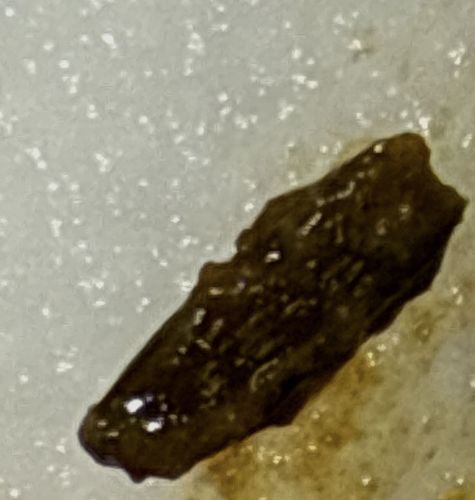
Household Casebearer (often confused with Plaster Bagworm)
Phereoeca uterella (sometimes referred to as Phereoeca allutella in older texts)
- Order & Family
- Order: Lepidoptera, Family: Tineidae (Clothes Moths)
- Size
- The silken case is typically 8-13 mm (approx. 0.3-0.5 inches) long.
Natural Habitat
Typically found indoors in dry, dusty areas such as closets, under furniture, on walls, baseboards, and in garages. They thrive in climates with high humidity, common in places like Florida and tropical regions.
Diet & Feeding
The larvae are detritivores, feeding on old spider webs, wool, hair, lint, dead insects, shed skin cells, and natural fibers.
Behavior Patterns
The larva constructs a flattened, pumpkin-seed-shaped protective case made of silk and camouflaged with debris like sand, dust, and insect parts. It drags this case closer as it moves. The larva never completely leaves the case until it pupates and emerges as an adult moth. It can poke its head out from either end of the case to feed or move.
Risks & Benefits
Risks: Generally considered a nuisance pest rather than harmful. They do not bite or sting humans. However, in large numbers, they can cause minor damage to woolens, rugs, or fabrics. Benefits: Minimal, slightly helpful as scavengers of old spider webs and dust bunnies.