
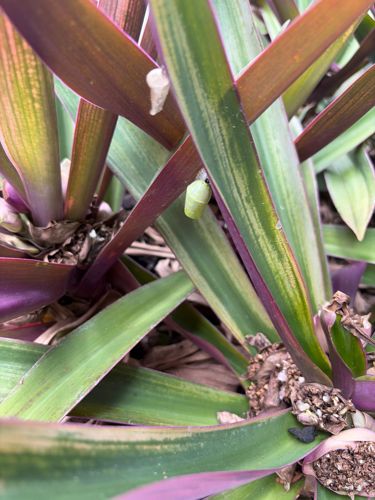
Community identification
Monarch butterfly chrysalis
Danaus plexippus
- Order & Family
- Lepidoptera, Nymphalidae
- Size
- The chrysalis is typically 2.5 to 3 cm (1 to 1.2 inches) in length.
Natural Habitat
Found in open fields, meadows, prairies, and gardens, specifically where milkweed (Asclepias species) is present.
Diet & Feeding
In this pupal stage, the organism does not eat. Larvae (caterpillars) eat milkweed; adults drink nectar from various flowers.
Behavior Patterns
The chrysalis is the sedentary pupal stage where metamorphosis occurs over 10-14 days. It is anchored to a surface by a silk pad and a gubernaculum (cremaster) and turns transparent right before the butterfly emerges.
Risks & Benefits
Monarchs are vital pollinators and an indicator species for environmental health. They pose no risk to humans, though they are toxic to predators if ingested due to cardenolides from the milkweed they eat.