
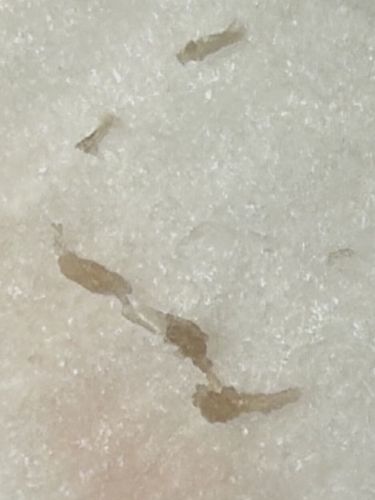
Booklice (or Psocids)
Liposcelis spp. (Commonly L. bostrychophila or L. entomophila)
- Order & Family
- Psocodea (formerly Psocoptera); Family: Liposcelididae
- Size
- Very small, typically 1 mm to 2 mm in length (less than 1/16 inch).
Natural Habitat
Booklice thrive in high-humidity environments (warm and damp). They are commonly found indoors in stored food products (flour, cereals, grains, sugar), dusty books, and behind wallpaper where microscopic mold grows.
Diet & Feeding
They feed primarily on microscopic mold and fungi, as well as starchy materials like book binding glue, wallpaper paste, and stored pantry grains or sugar (often when the product has absorbed moisture).
Behavior Patterns
These insects are wingless and run relatively quickly but often appear static until disturbed. They do not bite humans. Their population can explode rapidly in humid conditions. They are often seen on white surfaces like flour or sugar containers.
Risks & Benefits
Risks: They are a nuisance pest that contaminates stored food products, rendering them unfit for consumption due to the presence of insect bodies and waste. They can indicate dampness or mold issues in a home. Benefits: They are harmless scavengers in nature, helping break down organic matter, but have no direct benefit inside a home.