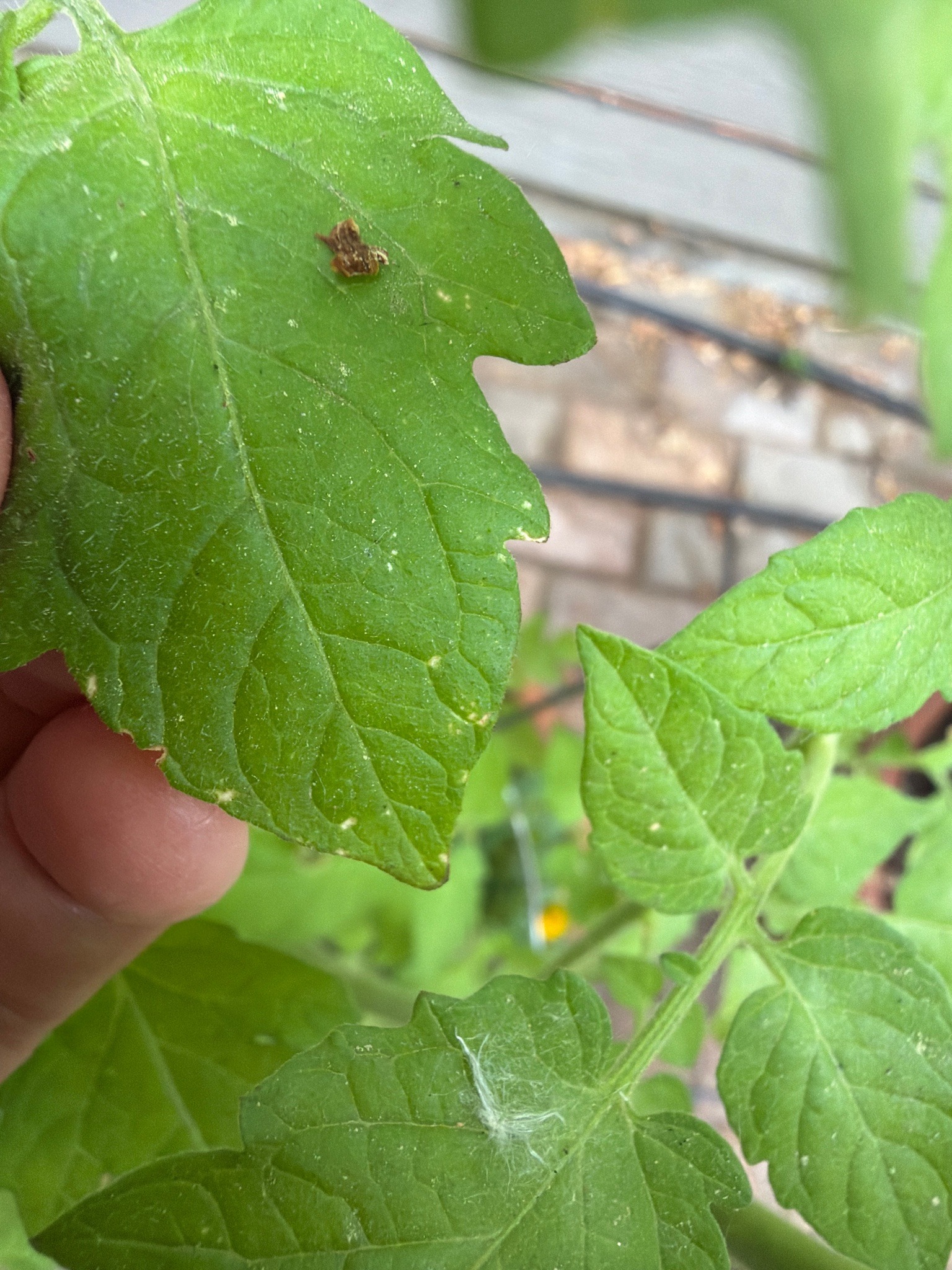
Tortoise Beetle larva (specifically Clavate Tortoise Beetle larva)
Scientific Name: Plagiometriona clavata
Order & Family: Order Coleoptera (Beetles), Family Chrysomelidae (Leaf Beetles)
Size: Larvae are generally small, ranging from 5 mm to 8 mm in length.
Natural Habitat
Typically found on the foliage of host plants in the family Solanaceae, including tomatoes, peppers, potatoes, and horse nettle.
Diet & Feeding
Larvae and adults are herbivorous, feeding on the leaves of host plants, often creating small, circular holes in the foliage.
Behavior Patterns
The larva is known for its unusual defense mechanism where it creates an 'excremental shield' out of shed skins and fecal matter, which it carries over its back to deter predators. They undergo a complete metamorphosis from egg to larva, pupa, and finally adult.
Risks & Benefits
They are considered a minor garden pest because their feeding can damage plant leaves, but they rarely cause enough harm to kill a plant or significantly reduce its harvest. They are part of the ecosystem's food web, serving as prey for predatory insects and birds.
Identified on: 6/24/2026