
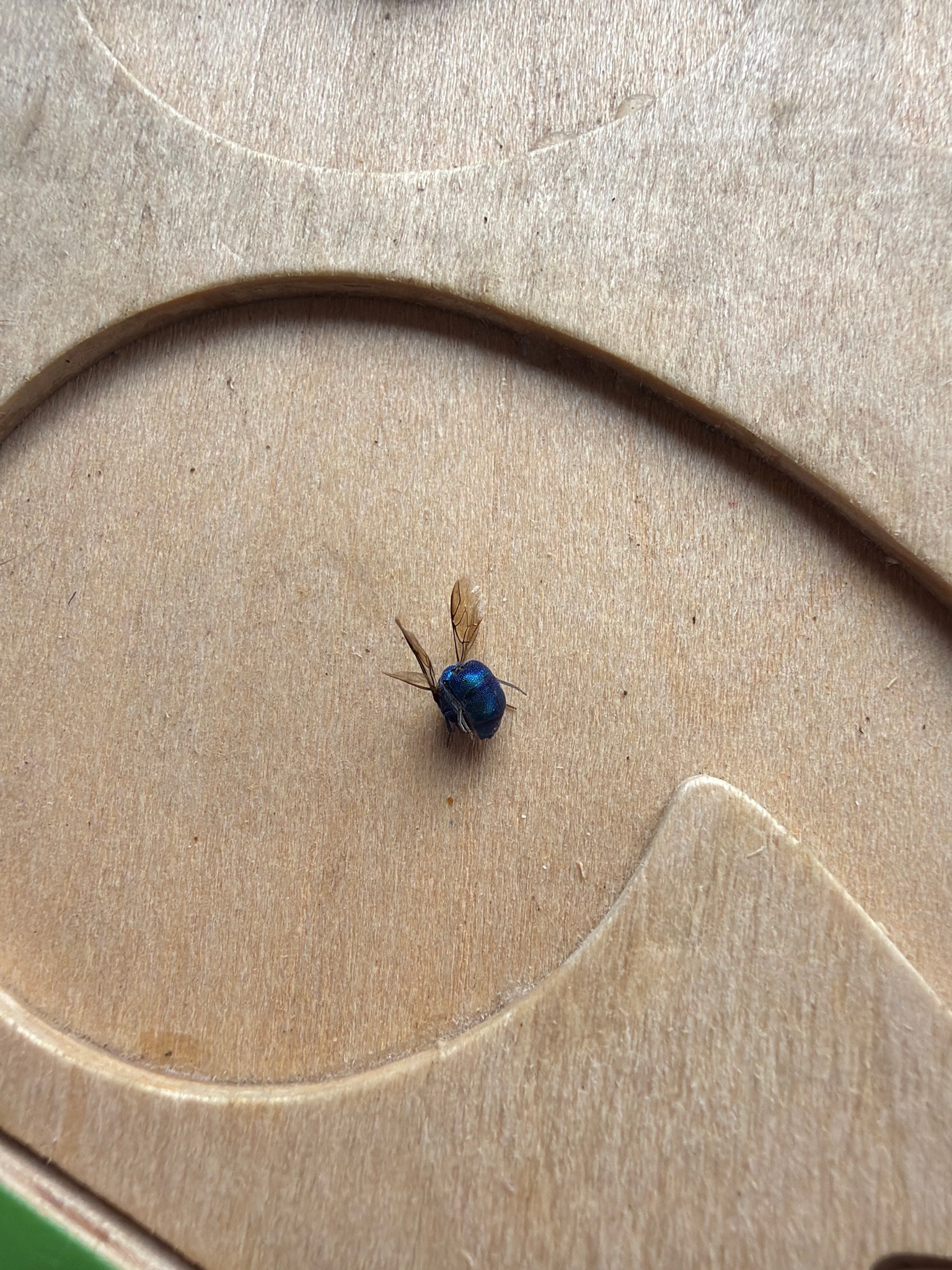
Cuckoo Wasp
Family Chrysididae
- Order & Family
- Hymenoptera: Chrysididae
- Size
- Typically 6mm to 12mm (0.24 to 0.47 inches) in length.
Natural Habitat
Found worldwide, particularly in open, sunny areas near the nests of host bees and wasps, such as sandy banks, old wood, or hollow stems.
Diet & Feeding
Adults feed on flower nectar and pollen. Larvae are cleptoparasites or parasitoids, consuming the eggs or larvae of host insects (typically solitary bees or wasps) along with their stored food.
Behavior Patterns
They are known for their brilliant metallic colors and the ability to curl into a tight ball (volvulation) for protection when threatened. They are 'cuckoo' insects, meaning they lay their eggs in the nests of other species.
Risks & Benefits
They pose no risk to humans as they lack a functional stinger (it has been modified into an egg-laying tube). They benefit the ecosystem by acting as pollinators as adults and helping to regulate populations of other insects.