
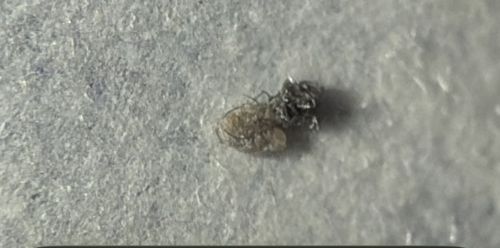
Booklouse (or Psocid)
Liposcelis spp. (Liposcelididae)
- Order & Family
- Order: Psocodea (formerly Psocoptera); Family: Liposcelididae
- Size
- Very small/minute, typically 1 to 2 millimeters in length.
Natural Habitat
Found in warm, high-humidity environments indoors, particularly near mold. Common in old books, wallpaper, stored food products like grains, damp pantries, and window sills.
Diet & Feeding
They feed on microscopic fungi, mold, starch, glues (like those in book bindings), and decomposing organic debris. They sometimes infest stored grains or cereals.
Behavior Patterns
Booklice do not fly; they run quickly when disturbed. They thrive in humidity which supports the growth of mold (their food source). They undergo simple metamorphosis (egg, nymph, adult).
Risks & Benefits
They do not bite humans or animals and do not transmit diseases. However, they are considered nuisance pests and can contaminate stored kitchen goods. Their presence usually indicates a moisture or mold problem in the home.