
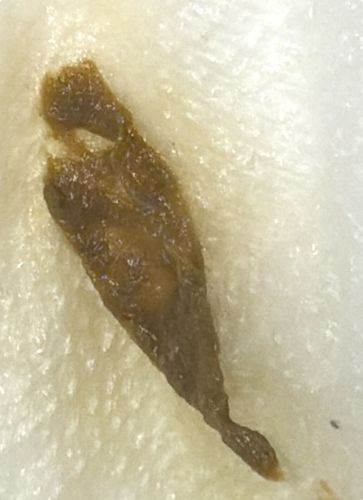
Slug (likely a keelback slug or desiccated garden slug)
Gastropoda (Class); possibly Limacidae or Agriolimacidae family
- Order & Family
- Order: Stylommatophora; Family: Various (commonly Limacidae)
- Size
- Varies greatly by species; typically 1-4 inches (2.5 - 10 cm) when fully extended, but much smaller and condensed when contracted or dried out.
Natural Habitat
Damp environments, gardens, under rocks, in soil, or areas with decaying organic matter. They require moisture to prevent desiccation.
Diet & Feeding
Herbivorous and detritivorous; they feed on living plant leaves, decaying vegetation, fungi, and sometimes other small invertebrates.
Behavior Patterns
Nocturnal activity to avoid drying out; they travel on a layer of slime/mucus. This specimen appears dead, potentially dried out, or damaged, lacking the distinct turgidity of a healthy slug.
Risks & Benefits
Risks: Can be significant garden pests, eating holes in leaves and damaging crops. They can also transmit parasites (like rat lungworm) if ingested or handled improperly. Benefits: They aid in decomposition by breaking down organic matter and recycling nutrients into the soil.