
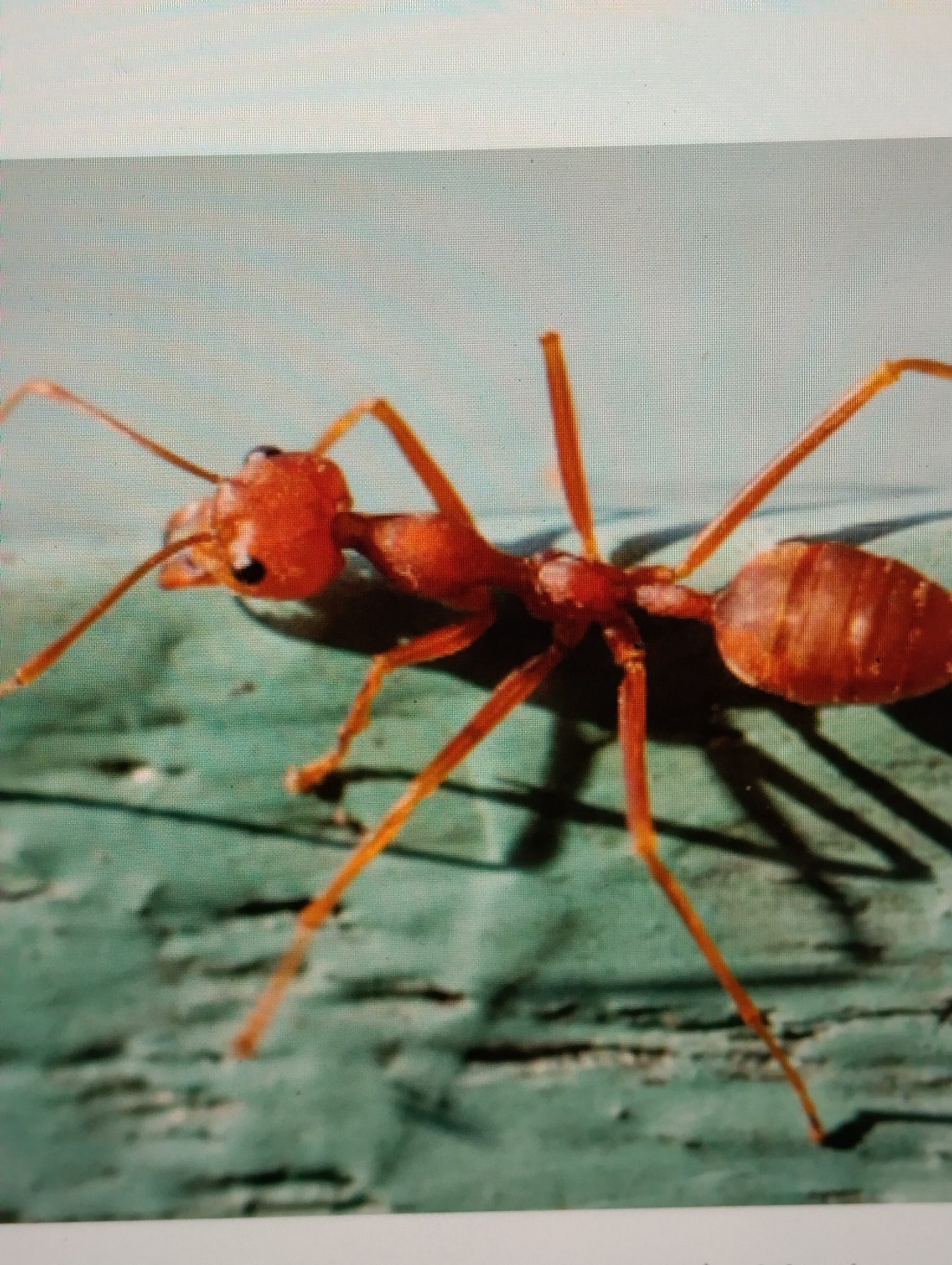
Community identification
Weaver Ant (Oecophylla)
Oecophylla smaragdina
- Order & Family
- Order Hymenoptera, Family Formicidae
- Size
- 8 to 10 mm for workers; queens are significantly larger, up to 20-25 mm.
Natural Habitat
Tropical forests and gardens across Asia and Australia, predominantly inhabiting tree canopies.
Diet & Feeding
Omnivorous, feeding on small insects, invertebrates, and honeydew excreted by sap-sucking insects (aphids and scale insects).
Behavior Patterns
Notable for building arboreal nests by weaving living leaves together using silk produced by their larvae. They are highly territorial, social insects that live in complex colonies with multiple nests.
Risks & Benefits
Benefits: Effective biological control agents as they prey on agricultural pests. Risks: Aggressive if disturbed, possessing a painful bite and the ability to spray formic acid into the wound site.