
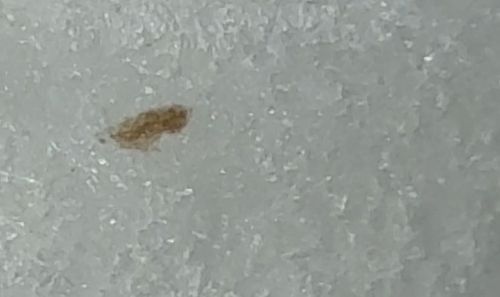
Booklouse (or Psocid)
Liposcelis spp. (Commonly Liposcelis bostrychophila)
- Order & Family
- Order: Psocodea (formerly Psocoptera), Family: Liposcelididae
- Size
- Very small/minute; typically less than 1 mm to 2 mm in length.
Natural Habitat
Found in warm, damp environments with high humidity; often discovered in books, stored food products (like flour, grains, sugar), wallpaper paste, and moldy items.
Diet & Feeding
Scavengers that feed on microscopic mold, fungi, starch, glue (book bindings), and organic debris.
Behavior Patterns
They are wingless, soft-bodied insects that move quickly but do not fly. They thrive in humidity and reproduce rapidly via parthenogenesis (asexual reproduction). They are often indicators of dampness or fungal growth.
Risks & Benefits
Risks: They are a nuisance pest that contaminates stored food products and can cause psychological distress. They do not bite, sting, or transmit diseases to humans. Benefits: Negligible in homes, but in nature, they help decompose organic matter.