
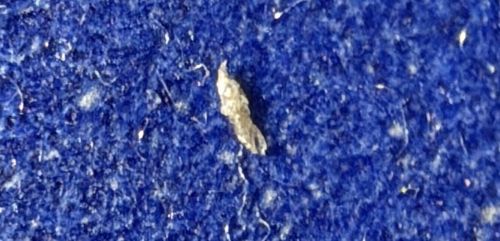
Case-bearing Clothes Moth Larva
Tinea pellionella
- Order & Family
- Order: Lepidoptera, Family: Tineidae
- Size
- Larvae are roughly 6-10 mm long; the case they carry is about the same length.
Natural Habitat
Typically found indoors in dark, undisturbed areas such as closets, drawers, attics, and underneath furniture. They thrive near their food sources: wool, fur, carpet, and other natural fibers.
Diet & Feeding
The larvae feed on keratin-rich natural fibers including untreated wool, hair, fur, silk, felt, feathers, and occasionally cotton or stored food products.
Behavior Patterns
Unlike the Webbing Clothes Moth, this larva constructs a portable, silken tube or 'case' around itself, which it carries around like a snail shell. It pokes its head out to feed and retreats inside when disturbed. It never leaves this case during its larval stage and enlarges it as it grows.
Risks & Benefits
Risk: They are a significant household pest known for damaging clothes, carpets, and upholstery made of natural fibers. They do not bite or sting humans and pose no direct health threat, but the financial cost of damage can be substantial. Benefit: In nature, they help decompose animal matter (like feathers and fur), playing a role in nutrient recycling.