
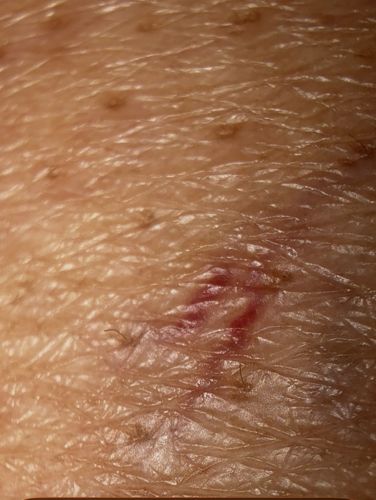
Community identification
Scabies Mite (Sarcoptes scabiei)
Sarcoptes scabiei var. hominis
- Order & Family
- Order: Sarcoptiformes / Family: Sarcoptidae
- Size
- Microscopic; females are 0.30–0.45 mm long and 0.25–0.35 mm wide; males are slightly smaller.
Natural Habitat
The mite lives entirely on or within the skin of humans, specifically burrowing into the upper layer (stratum corneum) of the epidermis.
Diet & Feeding
Feeds on human skin cells and lymphatic fluid found within the epidermis.
Behavior Patterns
Female mites burrow into the skin to lay eggs, creating serpentine tunnels (burrows) visible on the skin surface. Larvae hatch and move to the skin surface to molt. They spread through prolonged direct skin-to-skin contact.
Risks & Benefits
Risk: Causes Scabies, an intensely itchy skin infestation characterized by rashes, burrows, and potential secondary bacterial infections (like impetigo) due to scratching. No ecosystem benefits as it is an obligate parasite.