
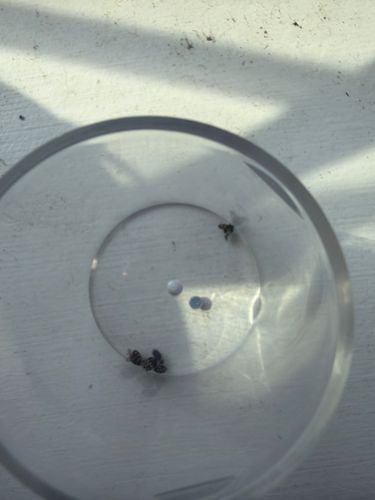
Community identification
Cluster Fly
Pollenia rudis
- Order & Family
- Order Diptera, Family Polleniidae
- Size
- Approx. 8-10 mm (slightly larger and slower than a common house fly)
Natural Habitat
Typically found outdoors in fields and gardens during warm months; they enter houses and buildings to hibernate in wall voids or attics during winter.
Diet & Feeding
Larvae are parasitic on earthworms; adults feed on plant nectar, fruit juices, and other organic liquids.
Behavior Patterns
They are known for 'clustering' in large numbers in attics or window frames as cold weather approaches. They have a sluggish, clumsy flight and often drop to the floor when disturbed.
Risks & Benefits
They do not bite humans or carry diseases associated with filth like house flies, making them primarily a nuisance. In the ecosystem, they help regulate earthworm populations.