
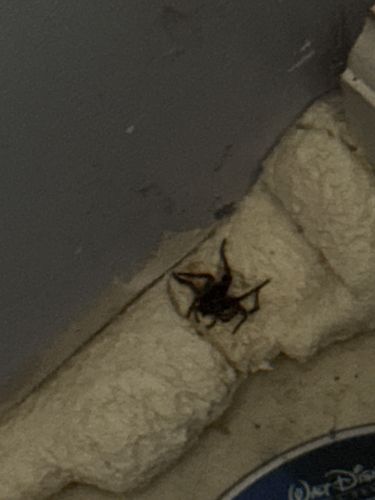
Wolf Spider
Family Lycosidae
- Order & Family
- Order Araneae, Family Lycosidae
- Size
- 10 to 35 mm (0.4 to 1.38 inches) in body length.
Natural Habitat
Found in a wide variety of habitats including grasslands, forests, wetlands, and frequently inside human dwellings such as basements or garages.
Diet & Feeding
Carnivorous; they primarily eat ground-dwelling insects like crickets, beetles, and other spiders.
Behavior Patterns
Unlike most spiders, they do not spin webs to catch prey. They are agile hunters with excellent eyesight that chase down or ambush their prey. Females are known for carrying their egg sacs attached to their spinnerets and later carrying their spiderlings on their backs.
Risks & Benefits
They are beneficial to ecosystems as they control pest populations. While they are venomous, they are generally not aggressive toward humans and will only bite if provoked. Their bite is typically no more dangerous than a bee sting, though it can cause localized pain and swelling.