
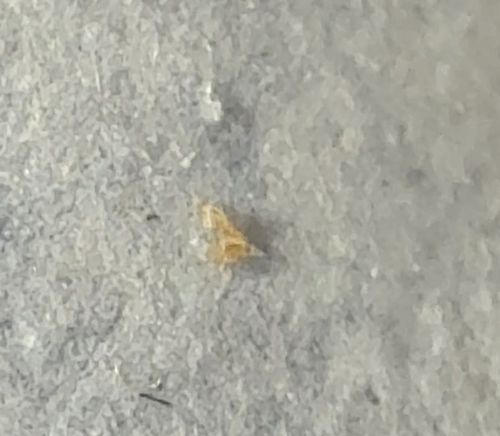
Lace Bug (specifically likely the Sycamore Lace Bug or a related species)
Corythucha spp. (likely Corythucha ciliata)
- Order & Family
- Order: Hemiptera, Family: Tingidae
- Size
- Very small; typically 3 to 6 mm (about 1/8 to 1/4 inch) in length
Natural Habitat
Found primarily on the underside of deciduous tree leaves (e.g., Sycamores, Oaks, Hackberries, Azaleas). While they live on trees, they often fall onto outdoor furniture, patios, or people during late summer and autumn.
Diet & Feeding
Sap-suckers that feed on the fluid from plant cells on the underside of leaves. This feeding causes stippling or bleaching of foliage.
Behavior Patterns
They are mostly solitary feeders but can aggregate in large numbers. In late summer/early fall, their populations peak, and they often drop from tree canopies in search of overwintering sites (like under bark strips) or are blown by the wind, leading them to land on nearby surfaces or people.
Risks & Benefits
Risks: Can be a nuisance to humans as they are known to 'bite' (likely chemically probing the skin) which can cause mild dermatological irritation or stinging sensations. They are pests to host trees, causing aesthetic damage (yellowing leaves) but rarely killing mature trees. Benefits: Part of the food web, serving as prey for generalist predators like spiders and assassin bugs.