
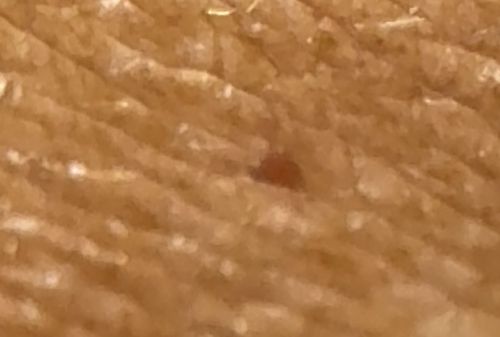
Chigger (Larval Trombiculid Mite)
Trombicula species (e.g., Trombicula alfreddugesi)
- Order & Family
- Order: Trombidiformes; Family: Trombiculidae
- Size
- Microscopic to barely visible; larvae are approximately 0.17–0.4 mm in length.
Natural Habitat
Grassy fields, forests, parks, gardens, and moist areas with vegetation like berry patches or tall grass; specifically found on the skin of hosts during their feeding stage.
Diet & Feeding
Parasitic in larval stage, feeding on dissolved skin cells (not blood) of animals and humans; adults are predators that feed on insect eggs and small invertebrates.
Behavior Patterns
Larvae wait on vegetation to transfer to passing hosts. Once on a host, they attach to the skin, inject digestive enzymes to liquefy skin cells, and feed on the resulting fluid. They drop off after feeding to molt into nymphs.
Risks & Benefits
Risks: Intense itching, red welts, and potential for secondary skin infections due to scratching; rare transmission of scrub typhus in certain parts of Asia. Benefits: Adults play a minor role in controlling populations of small insects and insect eggs.