
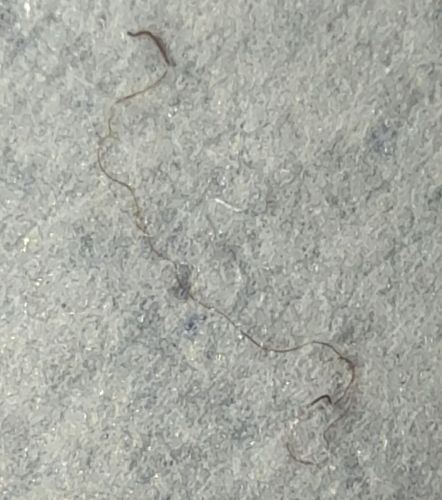
Horsehair Worm (also known as Gordian Worm)
Gordius species (Phylum Nematomorpha)
- Order & Family
- Order: Gordioidea, Phylum: Nematomorpha
- Size
- Very thin (1-3 mm wide) but can grow quite long, ranging from 4 inches to over 2 feet (10-70 cm) in length.
Natural Habitat
Typically found in freshwater environments like puddles, troughs, swimming pools, streams, and damp soil. Adults are free-living in water, while juveniles are parasitic inside insects.
Diet & Feeding
Adults do not feed; they rely on stored energy. Larvae are internal parasites that feed on the soft tissues of hosts such as crickets, grasshoppers, katydids, beetles, and cockroaches.
Behavior Patterns
Larvae develop inside an insect host, often manipulating the host's behavior to seek water. Once the host enters water, the adult worm emerges. They are often seen twisting into intricate knots, hence the name 'Gordian worm.'
Risks & Benefits
Harmless to humans, pets, and plants. They do not bite, sting, or infect mammals. They are considered beneficial in some contexts as they act as a natural biological control for pest insect populations like crickets and cockroaches.