
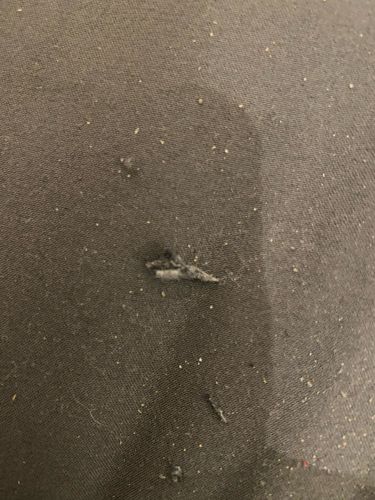
Community identification
Plaster Bagworm
Phereoeca uterella
- Order & Family
- Lepidoptera: Tineidae
- Size
- Case length is typically 8 mm to 14 mm
Natural Habitat
Indoor environments, particularly in humid climates, often found on walls or floors in homes, garages, or basements.
Diet & Feeding
The larvae feed on spider webs, wool, human hair, fur, and dead insect remains.
Behavior Patterns
The larva builds a flattened, spindle-shaped case from silk and debris (sand, dust, lint). It stays inside the case, dragging it along as it moves, and can flip its body to emerge from either end; eventually, it attaches the case to a vertical surface to pupate.
Risks & Benefits
They are considered minor household pests as they can damage natural fiber fabrics like wool or silk. They are harmless to humans and do not bite or sting, but their presence can indicate high humidity or the presence of many spiders (as they eat webs).