
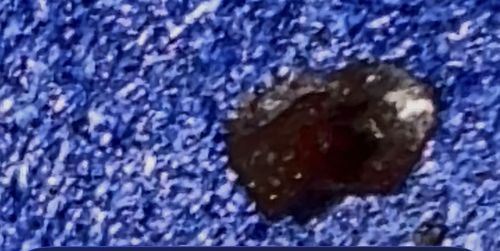
Dog Tick (Engorged)
Dermacentor variabilis (likely species for common dog ticks)
- Order & Family
- Order: Ixodida, Family: Ixodidae
- Size
- 3–5 mm before feeding; can expand to 15 mm (size of a small grape) when fully engorged.
Natural Habitat
Typically found in areas with tall grass, brush, woods, or frequently on host animals like dogs, livestock, or humans after detaching.
Diet & Feeding
Hematophagous (blood-sucking). They feed on the blood of mammals, including humans and dogs.
Behavior Patterns
They ambush hosts by 'questing' on grass tips. Once attached, they feed for several days until full (engorged), then drop off the host to digest or lay eggs. The image appears to show a dried or dead specimen that has likely fallen off.
Risks & Benefits
Significant Risk: They are vectors for diseases such as Rocky Mountain Spotted Fever and Tularemia. They can cause tick paralysis and local skin infections. They offer little ecological benefit other than being a food source for birds and some insects.