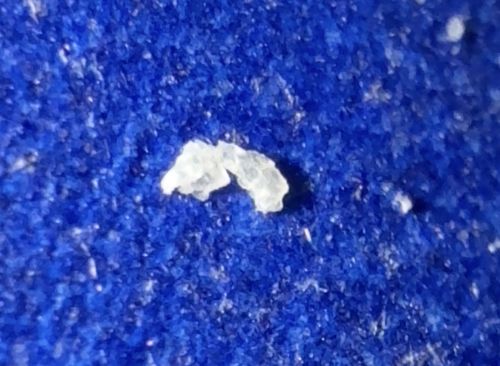
Body louse nit
Scientific Name: Pediculus humanus humanus
Order & Family: Order: Psocodea (formerly Phthiraptera), Family: Pediculidae
Size: 0.5 mm to 1 mm in length (for the egg/nit); adults are 2.5 mm to 3.5 mm.
Natural Habitat
Human clothing (especially seams) and skin; cosmopolitan distribution in crowded or unsanitary conditions.
Diet & Feeding
Obligate hematophages; they feed exclusively on human blood several times a day.
Behavior Patterns
Unlike head lice, body lice live and lay their eggs (nits) in the seams of clothing, only moving to the skin to feed. Their life cycle consists of the egg, three nymphal stages, and the adult.
Risks & Benefits
Risks: Significant medical pest; vectors for serious diseases including epidemic typhus, trench fever, and louse-borne relapsing fever. Can cause intense itching and skin rashes (pediculosis). Benefits: None.
Identified on: 3/12/2026