
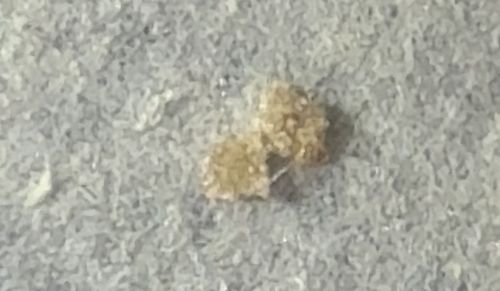
Household Casebearer (often confused with Plaster Bagworm)
Phereoeca uterella (or closely related Phereoeca allutella)
- Order & Family
- Order: Lepidoptera, Family: Tineidae
- Size
- Larval cases are typically 8 to 13 mm (0.3 to 0.5 inches) in length.
Natural Habitat
Typically found indoors in humid climates, often seen on walls, baseboards, underneath furniture, or in closets where they feed on organic fibers and spider webs. They construct a protective case out of silk and debris (sand, soil, insect parts) which they carry with them.
Diet & Feeding
The larvae feed on old spider webs (hence the name 'household casebearer'), wool, hair, lint, dead insect parts, and other organic debris found in dusty corners.
Behavior Patterns
The larva lives inside a flat, pumpkin-seed or spindle-shaped case made of silk and camouflaged with surrounding debris. It can poke its head and legs out of either end of the case to pull itself along walls or floors. When threatened, it retracts completely inside.
Risks & Benefits
Generally considered a minor household nuisance rather than a serious pest. They do not bite or sting humans. While they can feed on wool or natural fibers, they rarely cause significant damage unless present in large numbers.