
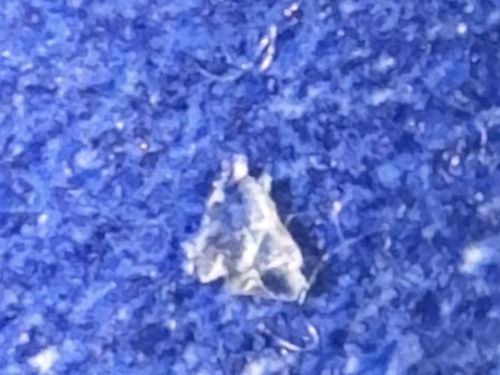
Household Casebearer (often misidentified as a lint mite or debris)
Phereoeca uterella or Phereoeca allutella
- Order & Family
- Order: Lepidoptera, Family: Tineidae
- Size
- Larval case is typically 6 mm to 12 mm (0.25 to 0.5 inches) long.
Natural Habitat
Typically found indoors in climate-controlled environments, often on walls, woolen items, or in corners where dust and lint accumulate. The blurry object shown is consistent with the protective casing these larvae build.
Diet & Feeding
The larvae feed on old spider webs, silk, wool, human hair, and other keratin-based materials found in household dust.
Behavior Patterns
The larva builds a flattened, pumpkin-seed-shaped case out of silk and debris (sand, soil, droppings, lint) which it carries around. It lives inside this case and extends its head and legs from one end to move.
Risks & Benefits
They are generally harmless to humans but can be a minor pest if they damage woolen fabrics or clothing. They are beneficial in a very minor way by eating old cobwebs and debris.