
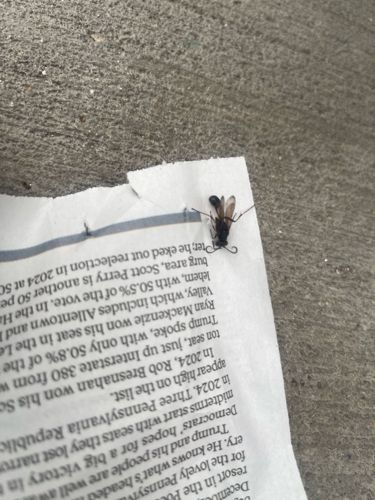
Community identification
Spider Wasp
Pompilidae (Family)
- Order & Family
- Order: Hymenoptera; Family: Pompilidae
- Size
- Typically 15 to 25 mm (0.6 to 1.0 inch), though some species can be smaller or much larger.
Natural Habitat
Widely distributed in gardens, woodlands, and sandy areas where they can find prey and burrow into the soil or wood.
Diet & Feeding
Adults feed on nectar from flowers. Larvae are carnivorous and feed exclusively on spiders provided by the mother.
Behavior Patterns
Solitary insects known for hunting spiders. A female stings a spider to paralyze it, drags it to a burrow, and lays a single egg on it before sealing the nest.
Risks & Benefits
They provide a benefit to the ecosystem by controlling spider populations. While they are usually not aggressive toward humans, they have a very painful sting if handled or provoked.