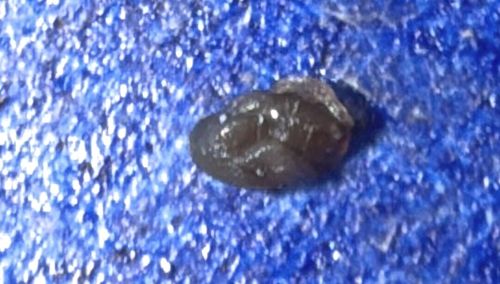
Slug (likely a small or juvenile specimen)
Scientific Name: Gastropoda (Class level, as exact species is difficult to determine from image)
Order & Family: Order: Stylommatophora, Family: Various (e.g., Limacidae or Arionidae)
Size: Varies greatly by species and age, typically ranging from less than 1 cm to over 15 cm; the specimen in the image appears quite small, likely under 2 cm.
Natural Habitat
Found in moist environments, under rocks, logs, leaf litter, and frequently in gardens. They are also notoriously found on damp outdoor surfaces like tarps or pool covers.
Diet & Feeding
Generalist herbivores and detritivores; they feed on decaying plant matter, fungi, and living plant tissue (leaves, stems, roots), making them common garden pests.
Behavior Patterns
Nocturnal activity to avoid desiccation; they produce slime (mucus) for locomotion and defense. They seek shelter in dark, damp places during the day.
Risks & Benefits
Risks: Can be significant agricultural and garden pests by eating crops and ornamental plants; can carry parasites (like rat lungworm) if ingested. Benefits: Play a role in recycling organic matter and breaking down decaying vegetation.
Identified on: 2/25/2026