
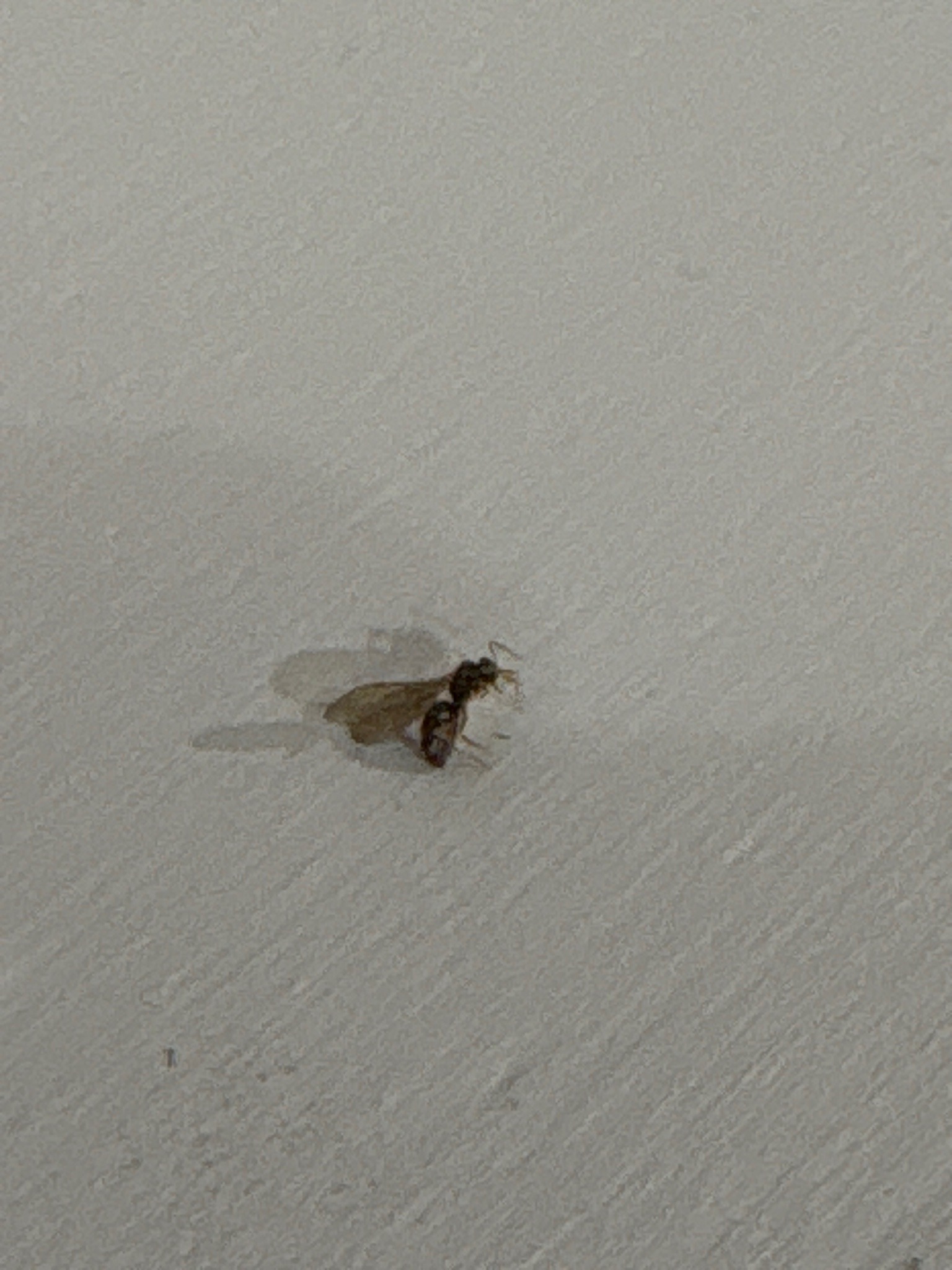
Winged Ant (Ant Alate)
Family Formicidae
- Order & Family
- Order Hymenoptera; Family Formicidae
- Size
- 3 mm to 15 mm, depending on the species and whether it is a male or a fertile female (queen).
Natural Habitat
Found globally; nests are typically located in soil, under rocks, or within rotting wood. Alates emerge specifically during nuptial flights.
Diet & Feeding
Broadly omnivorous; they eat nectar, seeds, other insects, and honeydew secreted by aphids. During the flight stage, they focus primarily on mating rather than feeding.
Behavior Patterns
These are reproductive members of an ant colony. They emerge in large swarms ('nuptial flights') triggered by environmental cues like rain and heat to mate and establish new colonies. After mating, males die and females shed their wings to become queens.
Risks & Benefits
Generally harmless to humans, though some species may sting if handled. They are beneficial to the ecosystem as decomposers, soil aerators, and a food source for birds and other wildlife. However, if found indoors in large numbers, it may indicate a nearby nest or potential structural infestation (if they are Carpenter Ants).