
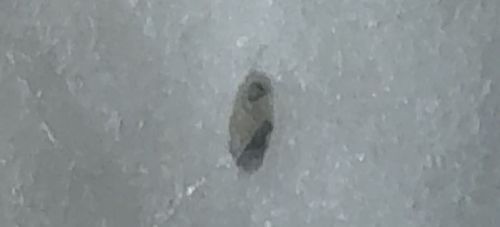
Household Casebearer or Plaster Bagworm
Phereoeca uterella (sometimes referred to as Phereoeca allutella in related contexts)
- Order & Family
- Order: Lepidoptera, Family: Tineidae
- Size
- The case is typically small, often around 8 to 13 millimeters (roughly 0.5 inches) long.
Natural Habitat
Commonly found inside homes, sticking to walls, ceilings, and in humid areas like closets, bathrooms, or garages. They are particularly common in warm, humid climates like Florida.
Diet & Feeding
The larvae feed on old spider webs, silk, wool, lint, hair, and sometimes dried insect remains. They are detritivores.
Behavior Patterns
The larva builds a flattened, pumpkin-seed-shaped protective case out of silk, sand, lint, and debris, which it drags around with it. The worm inside can turn around within the case to feed from either end. The case camouflages them well against concrete or plaster surfaces.
Risks & Benefits
They do not bite or sting humans and are not medically dangerous. However, they can be a nuisance pest in homes. In large numbers, they might damage woolen fabrics or accumulate unsightly debris, but they generally feed on detritus rather than structural materials.