
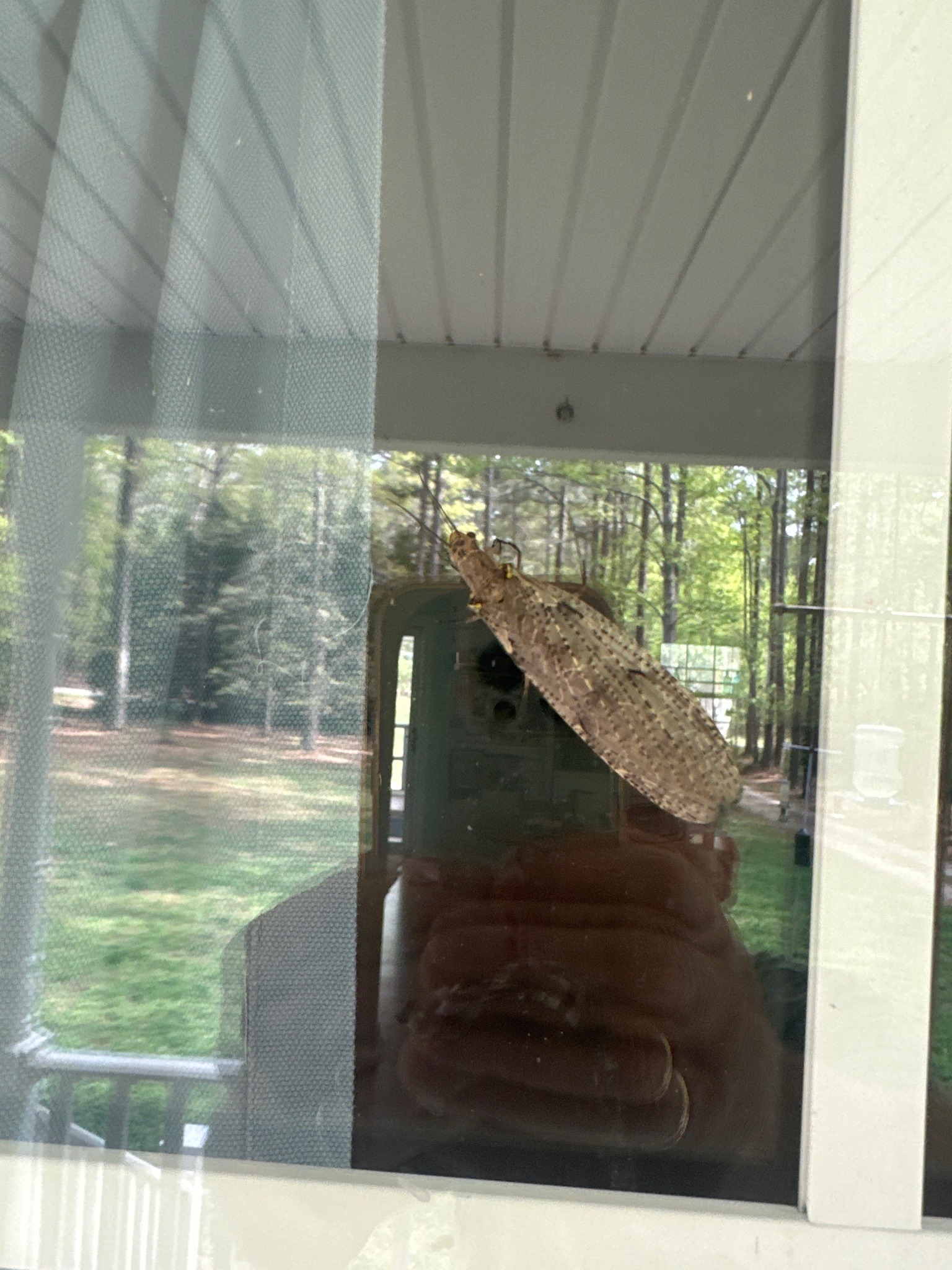
Community identification
Eastern Dobsonfly
Corydalus cornutus
- Order & Family
- Megaloptera, Corydalidae
- Size
- 2 to 5 inches (5 to 12.5 cm) in length
Natural Habitat
Found near clean, fast-moving rivers and streams with rocky bottoms; adults are often attracted to porch lights at night.
Diet & Feeding
Larvae (Hellgrammites) are predatory, eating aquatic insects; adults eat very little or nothing at all, though they may consume nectar or fruit juices.
Behavior Patterns
Night-active insects that spend most of their life underwater as larvae for 2-3 years. Adults emerge for just a few days to mate and die. They are strong fliers but appear clumsy.
Risks & Benefits
Benefits: Larvae are indicators of good water quality and are prized bait for fishermen. Risks: Females can deliver a painful bite if handled; males have large tusks (mandibles) that are intimidating but generally too weak to pierce skin.