
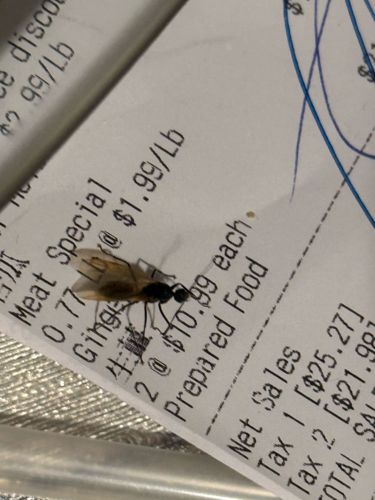
Community identification
Carpenter Ant (Winged Reproductive/Alate)
Camponotus ssp.
- Order & Family
- Order: Hymenoptera; Family: Formicidae
- Size
- Winged reproductives are often 12 to 18 millimeters (0.5 to 0.7 inches) in length, larger than typical workers.
Natural Habitat
Typically found in moist or decaying wood, such as hollow trees, stumps, and structural timbers in homes near moisture sources.
Diet & Feeding
Does not eat wood. Consumes protein sources like other insects and sugar sources like honeydew, nectar, and household sweets/meats.
Behavior Patterns
This winged individual is a reproductive (alate) taking part in a 'nuptial flight' to mate and establish new colonies. They are most active in spring and early summer.
Risks & Benefits
Structural risk: They can cause damage to homes by excavating galleries in wood to nest. Benefit: In nature, they are important decomposers that help break down dead wood and cycle nutrients into the soil.