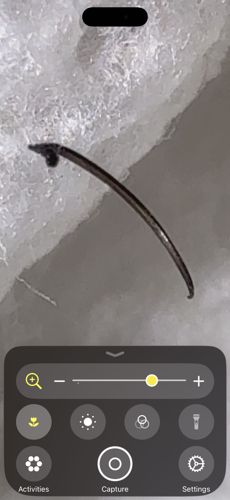
Glacier Ice Worm
Scientific Name: Mesenchytraeus solifugus
Order & Family: Enchytraeida, Enchytraeidae
Size: Approximately 1 to 2.5 centimeters (about 0.5 to 1 inch) in length.
Natural Habitat
Coastal glaciers in North America, specifically occurring in glacier ice and snowfields between Alaska and British Columbia/Washington.
Diet & Feeding
They feed on algae and pollen that get trapped in the snow and ice of glaciers.
Behavior Patterns
They are highly sensitive to temperature and UV light. They typically emerge onto the surface of the glacier at dusk or on cloudy days, and burrow deep into the ice during the day or when it gets too soft. They freeze to death if temperatures drop below freezing (about -7°C) but will melt and disintegrate if temperatures rise above 5°C (about 41°F).
Risks & Benefits
They pose no risk to humans. They are beneficial to the ecosystem as they provide a crucial food source for birds, like snow buntings and rosy finches, and serve as biological indicators of glacier health.
Identified on: 1/11/2026