
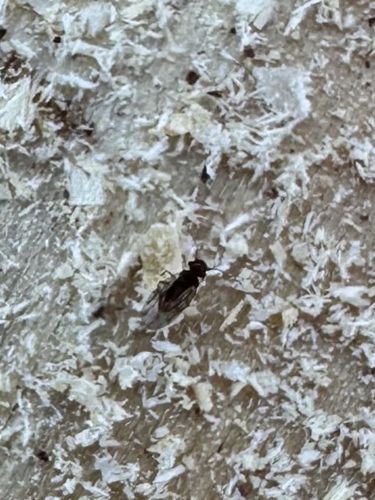
Community identification
Carpenter Ant Reproductive (Alate)
Camponotus spp.
- Order & Family
- Order Hymenoptera, Family Formicidae
- Size
- 10 to 18 mm (winged reproductives are generally larger than workers)
Natural Habitat
Typically found in moist or decaying wood, such as tree stumps, hollow logs, or damp structural timber in buildings.
Diet & Feeding
Does not eat wood but excavates it for nesting; primarily feeds on honeydew, insects, and sugary substances.
Behavior Patterns
The winged individuals (alates) are part of a 'nuptial flight' where they emerge from an established colony to mate and start new colonies during late spring or early summer.
Risks & Benefits
Risks include potential structural damage to homes if colonies are established in damp wood; benefits include aiding in the decomposition of old forest trees and improving soil aeration.