
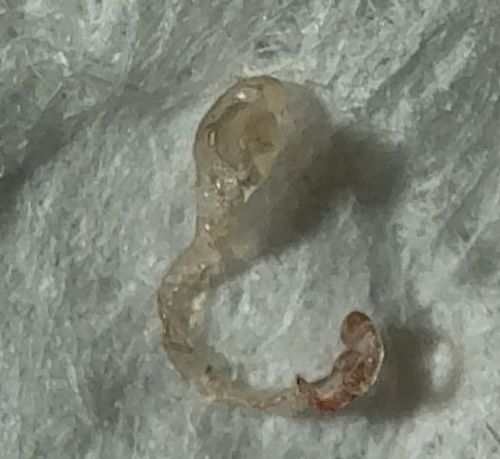
Flea Larva (possibly dried/desiccated)
Ctenocephalides felis (most likely common cat flea) or Ctenocephalides canis
- Order & Family
- Order: Siphonaptera, Family: Pulicidae
- Size
- 2mm to 5mm in length (larval stage)
Natural Habitat
Typically found in areas where pets rest (pet beds, carpets, cracks in hardwood floors). They prefer dark, somewhat humid environments away from direct sunlight.
Diet & Feeding
Flea larvae are detritivores. They feed on organic debris found in carpets and bedding, but their most critical food source is 'flea dirt' (dried blood excreted by adult fleas).
Behavior Patterns
Larvae are negatively phototactic (they avoid light). Upon hatching, they burrow deep into carpet fibers or floor cracks to find food and moisture. This specimen appears to be curled, which is common when they desiccate (dry out) or die.
Risks & Benefits
Risks: They mature into adult fleas that bite mammals (including humans) to feed on blood, causing itching, allergic dermatitis, and potentially transmitting parasites like tapeworms. There are no ecological benefits in a domestic setting.