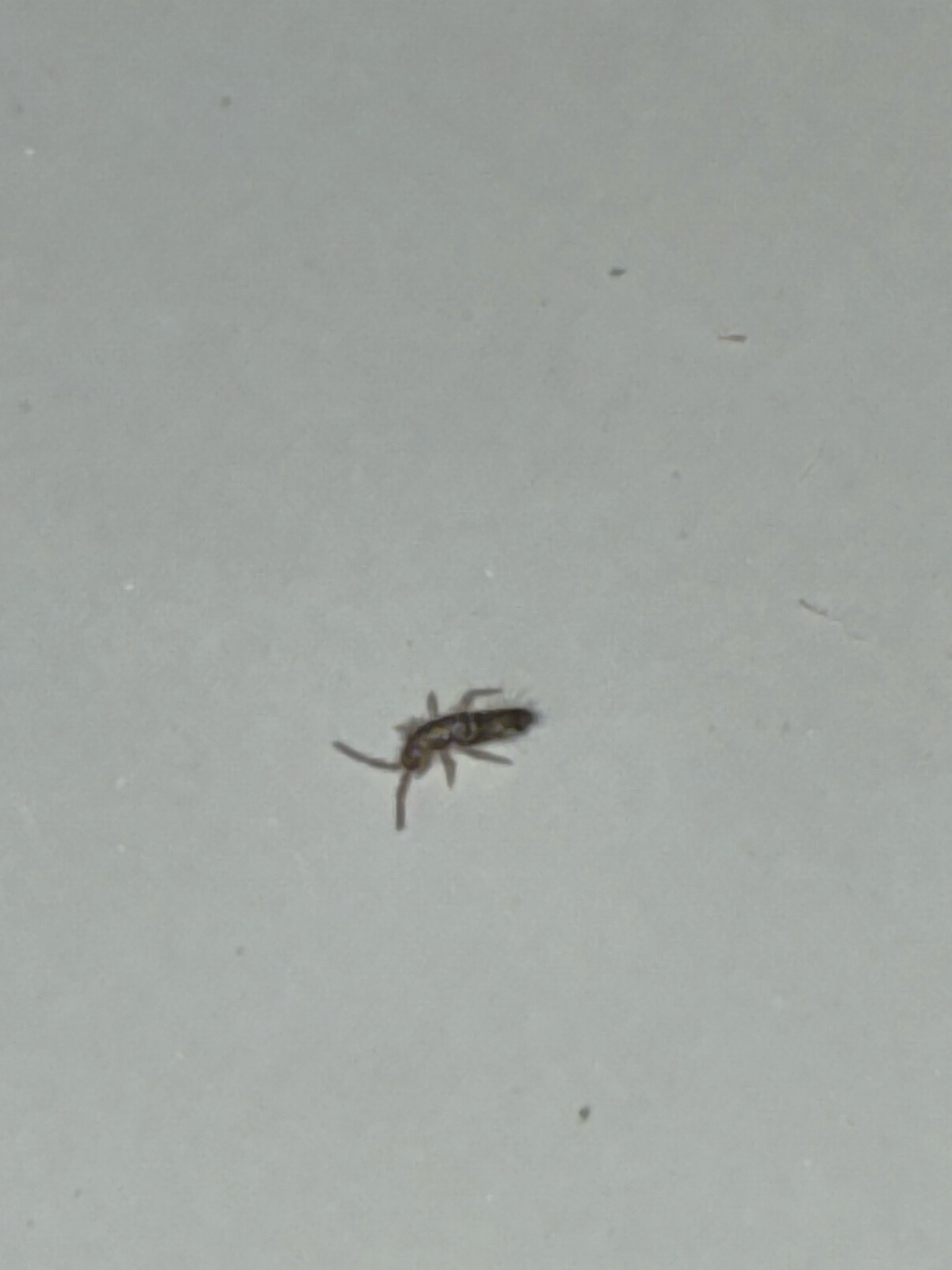
Springtail
Scientific Name: Entomobrya nivalis
Order & Family: Collembola, Entomobryidae
Size: 1 to 6 millimeters (typically very small)
Natural Habitat
Damp environments including soil, leaf litter, decaying wood, and moisture-rich areas around homes like bathrooms or kitchens.
Diet & Feeding
Detritivores and microbivores, feeding on fungi, mold, algae, bacteria, and decaying organic matter.
Behavior Patterns
Notable for their ability to jump long distances relative to their size using a tail-like structure called a furcula. They are active year-round and congregate in large numbers in moist areas.
Risks & Benefits
They pose no risk to humans or pets as they do not bite or sting. They are beneficial to the ecosystem by breaking down organic matter and cycling nutrients back into the soil.
Identified on: 6/30/2026