
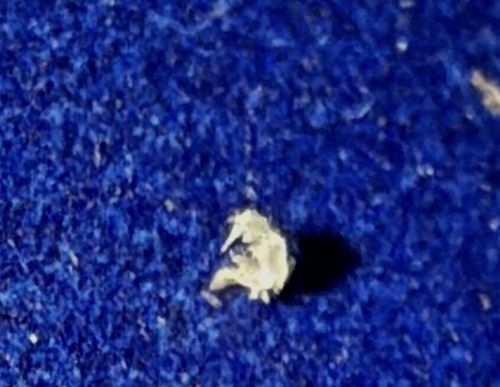
Junk Bug (or Trash Bug, Debris-Carrying Lacewing Larva)
Chrysopidae (Family level identification)
- Order & Family
- Order: Neuroptera; Family: Chrysopidae (Green Lacewings)
- Size
- Larvae are typically small, ranging from 2 mm to 10 mm in length, depending on the instar stage (excluding the size of the trash pile on their back).
Natural Habitat
Found on vegetation, including trees, shrubs, and garden plants, where their prey is abundant. Occasionally found indoors if brought in on plants or blown in by wind, though they don't infest homes.
Diet & Feeding
Carnivorous predators. They feed voraciously on soft-bodied insects like aphids, mealybugs, thrips, mites, whiteflies, and insect eggs. They are often called 'aphid lions.'
Behavior Patterns
The most notable behavior is their camouflage strategy. The larvae collect debris—such as the husks of their drained prey, lichen, moss, and bark—and attach it to specialized hooked bristles on their backs. This 'trash packet' serves as physical protection and visual camouflage against predators like birds and larger insects.
Risks & Benefits
Benefits: Highly beneficial to gardeners and farmers as they are aggressive biological control agents against common plant pests. Risks: Virtually harmless to humans. While they have jaws and can technically pinch or nip skin if handled roughly, the bite is minor and they are not venomous or dangerous.