
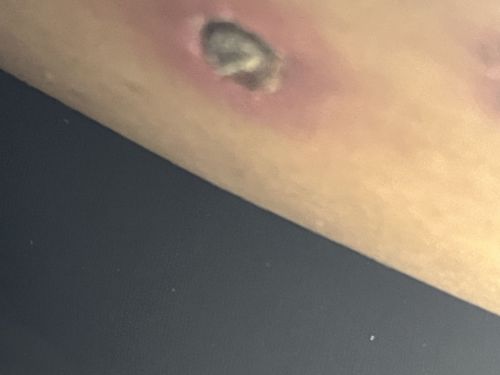
Community identification
Human Botfly (larval stage)
Dermatobia hominis
- Order & Family
- Order: Diptera; Family: Oestridae
- Size
- Larvae can grow up to 18-25 mm in length before exiting the host.
Natural Habitat
Tropical and subtropical regions of Central and South America; typically found in humid forests.
Diet & Feeding
Larvae are internal parasites that feed on the living tissue and inflammatory fluids of their hosts (mammals, including humans).
Behavior Patterns
The adult fly captures a phoretic insect (like a mosquito) and attaches its eggs to it. When the mosquito bites a mammal, the eggs hatch due to body heat and the larvae enter the host's skin through the bite wound or hair follicles, forming a 'warble' with a breathing hole.
Risks & Benefits
Causes myiasis, an infestation of living tissue. Risks include localized pain, inflammation, secondary bacterial infections, and significant discomfort. They provide no direct benefit to humans and are considered a pest.