
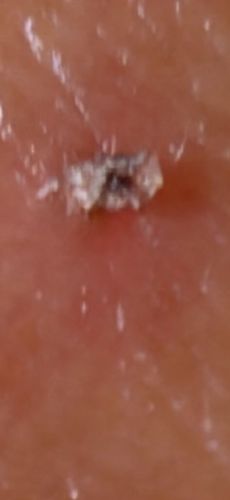
Community identification
Tick (likely a Nymph or Larva)
Ixodida (Order)
- Order & Family
- Order: Ixodida; Families: Ixodidae (hard ticks) or Argasidae (soft ticks)
- Size
- Larvae can be less than 1mm (poppy seed size); Nymphs are 1-2mm; Adults can range from 3-5mm unengorged to over 1cm when fully engorged.
Natural Habitat
Found worldwide, typically in grassy, brushy, or wooded areas where they wait for hosts to brush past.
Diet & Feeding
Hematophagous (feed exclusively on blood) from mammals, birds, reptiles, and amphibians.
Behavior Patterns
They exhibit 'questing' behavior, waiting on the tips of grass or shrubs with front legs extended to grab onto a passing host. They go through four life stages: egg, larva, nymph, and adult.
Risks & Benefits
Risks: Significant vectors for diseases such as Lyme disease, Rocky Mountain spotted fever, and ehrlichiosis. Their bite can cause irritation or infection. Benefits: Minimal, though they serve as food for some birds, reptiles, and amphibians.