Booklouse (or Psocid)
Scientific Name: Liposcelis spp. (Common genus for house-dwelling species)
Order & Family: Order: Psocodea (formerly Psocoptera), Family: Liposcelididae
Size: Very tiny, typically less than 1 mm to 2 mm in length.
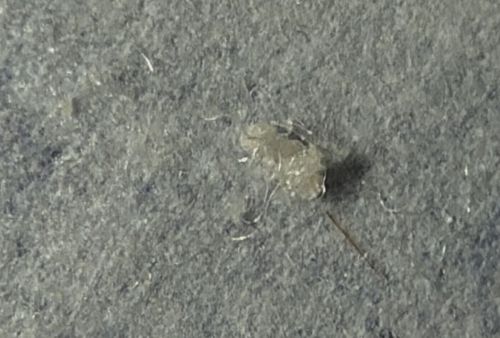
Natural Habitat
Indoor environments with high humidity or dampness, often found near moldy books, papers, wallpaper, stored grains, or dusty corners. They thrive in damp, warm areas.
Diet & Feeding
They feed on microscopic molds, fungi, starch, glues (like book bindings), and stored food products like grains or cereals.
Behavior Patterns
Booklice are wingless (most indoor species) and run quickly but rather jerkily. They do not bite humans or pets. They reproduce parthenogenetically (without fertilization) in warm conditions and can build up large populations quickly if humidity is high.
Risks & Benefits
Risks: Generally considered a nuisance pest rather than a health threat. They do not transmit diseases or bite. However, their presence indicates high humidity and potential mold issues in the home. They can contaminate stored food products. Benefits: In nature, they help break down organic detritus.
Identified on: 2/10/2026