
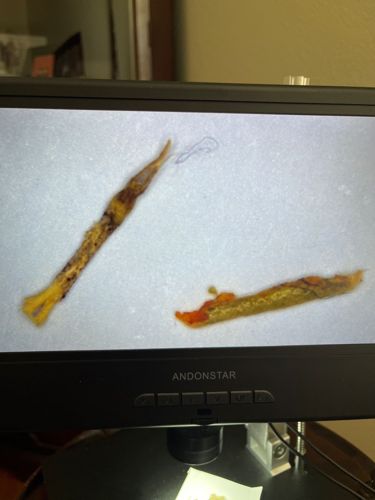
Bagworm Moth Larva
Family Psychidae
- Order & Family
- Order Lepidoptera, Family Psychidae
- Size
- Larval cases range from 1 to 2 inches (2.5 to 5 cm) in length.
Natural Habitat
Found on a wide variety of trees and shrubs, particularly evergreens like juniper, arborvitae, cedar, and pine, as well as some many deciduous trees.
Diet & Feeding
The larvae are generalist herbivores that feed on the foliage of their host plants, often causing significant defoliation.
Behavior Patterns
Larvae construct spindle-shaped cases made of silk and pieces of the host plant's leaves or twigs for protection. They carry these cases as they feed and eventually pupate inside them. Adult males are winged moths, while females are often wingless and remain inside their cases.
Risks & Benefits
They are considered a significant landscape pest that can cause severe damage or death to host trees through heavy defoliation. There are no direct risks to humans, and they provide some benefit as a food source for birds and certain predatory insects.