
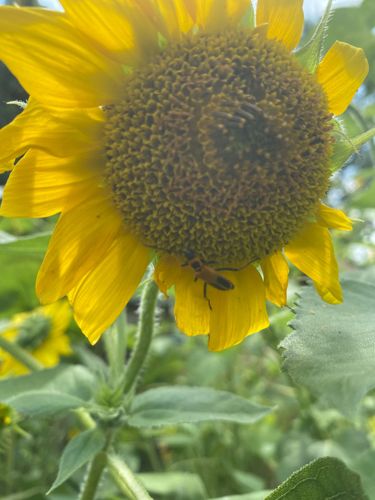
Soldier Beetle (likely a species of Goldenrod Soldier Beetle)
Podabrus species or Chauliognathus pennsylvanicus (for Goldenrod Soldier Beetle)
- Order & Family
- Order: Coleoptera, Family: Cantharidae
- Size
- Typically 10-15 mm (0.4-0.6 inches) in length
Natural Habitat
Found in gardens, meadows, fields, and other areas with flowering plants, particularly those with composite flowers like goldenrod, sunflowers, and daisies.
Diet & Feeding
Adult soldier beetles primarily feed on pollen and nectar. Some species also consume small soft-bodied insects like aphids. The larvae are carnivorous, preying on insect eggs, small larvae, and other soil-dwelling invertebrates.
Behavior Patterns
Soldier beetles are often seen on flowers, especially during late summer and fall, where they feed on pollen and nectar. They are active during the day and are generally slow-moving. Their larvae are predatory, living in soil or leaf litter, feeding on other invertebrates.
Risks & Benefits
Soldier beetles are highly beneficial insects. As adults, they are important pollinators, aiding in plant reproduction. Their larvae are valuable predators, helping to control populations of pest insects in the soil. They pose no known risks to humans.