
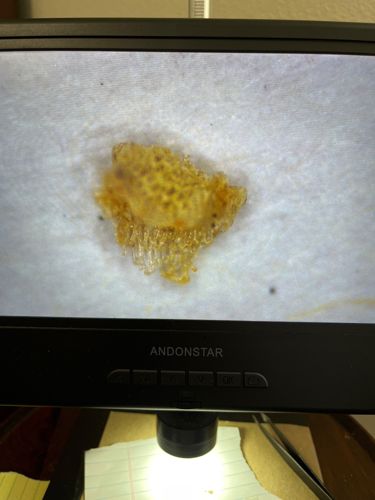
Lace Bug Nymph or Egg Mass
Tingidae (family)
- Order & Family
- Hemiptera (Order), Tingidae (Family)
- Size
- Nymphs typically range from 0.5 mm to 3 mm, depending on the instar. Egg masses vary in size but individual eggs are minute.
Natural Habitat
Found on the undersides of leaves of various host plants, including trees, shrubs, and herbaceous plants.
Diet & Feeding
Lace bug nymphs and adults are plant feeders, using their piercing-sucking mouthparts to feed on plant sap from the undersides of leaves.
Behavior Patterns
Lace bugs often feed in groups, causing stippling (tiny white or yellow spots) on the upper surface of leaves. Some species secrete a sticky, translucent, and often iridescent substance that can be seen on the leaf underside, sometimes mixed with frass and shed exoskeletons. The image appears to show either a cluster of early instar nymphs or possibly an egg mass covered in secretions/debris on the underside of a leaf, viewed under magnification. Early instars are often spiny or covered with secretions for protection.
Risks & Benefits
Risks: Lace bugs are considered plant pests. Their feeding can cause cosmetic damage (stippling, bronzing, premature leaf drop) to ornamental plants, shade trees, and some agricultural crops, reducing their aesthetic value and, in severe infestations, plant vigor. Benefits: Generally not considered beneficial, but they are part of the larger food web.