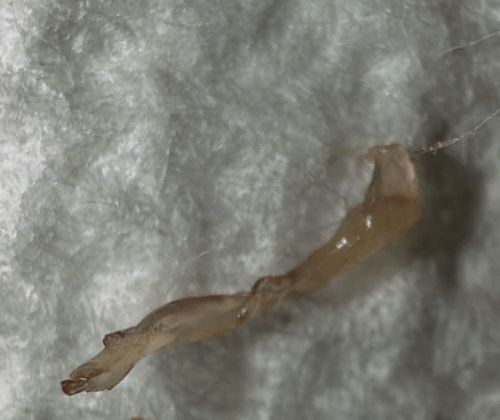
Human Scabies Mite (specimen fragment/debris) or Skin Scraping Debris
Scientific Name: Sarcoptes scabiei var. hominis (suspected context)
Order & Family: Order: Sarcoptiformes, Family: Sarcoptidae
Size: Microscopic; adult females are 0.30–0.45 mm long and 0.25–0.35 mm wide; males are slightly smaller.
Natural Habitat
The epidermis (outer layer) of human skin; they burrow into the stratum corneum to live and deposit eggs.
Diet & Feeding
Feeds on dissolved human tissue, lymph, and skin cells within the burrow.
Behavior Patterns
Female mites burrow under the skin to lay eggs, causing intense itching (especially at night). The lifecycle (egg to adult) takes about 10-14 days. This image likely shows skin scraping debris or a desiccated mite fragment rather than a live, intact specimen.
Risks & Benefits
Risks: Highly contagious skin infestation causing intense pruritus (itching) and rashes; potential for secondary bacterial infection due to scratching (e.g., impetigo). Benefits: None known.
Identified on: 2/9/2026