
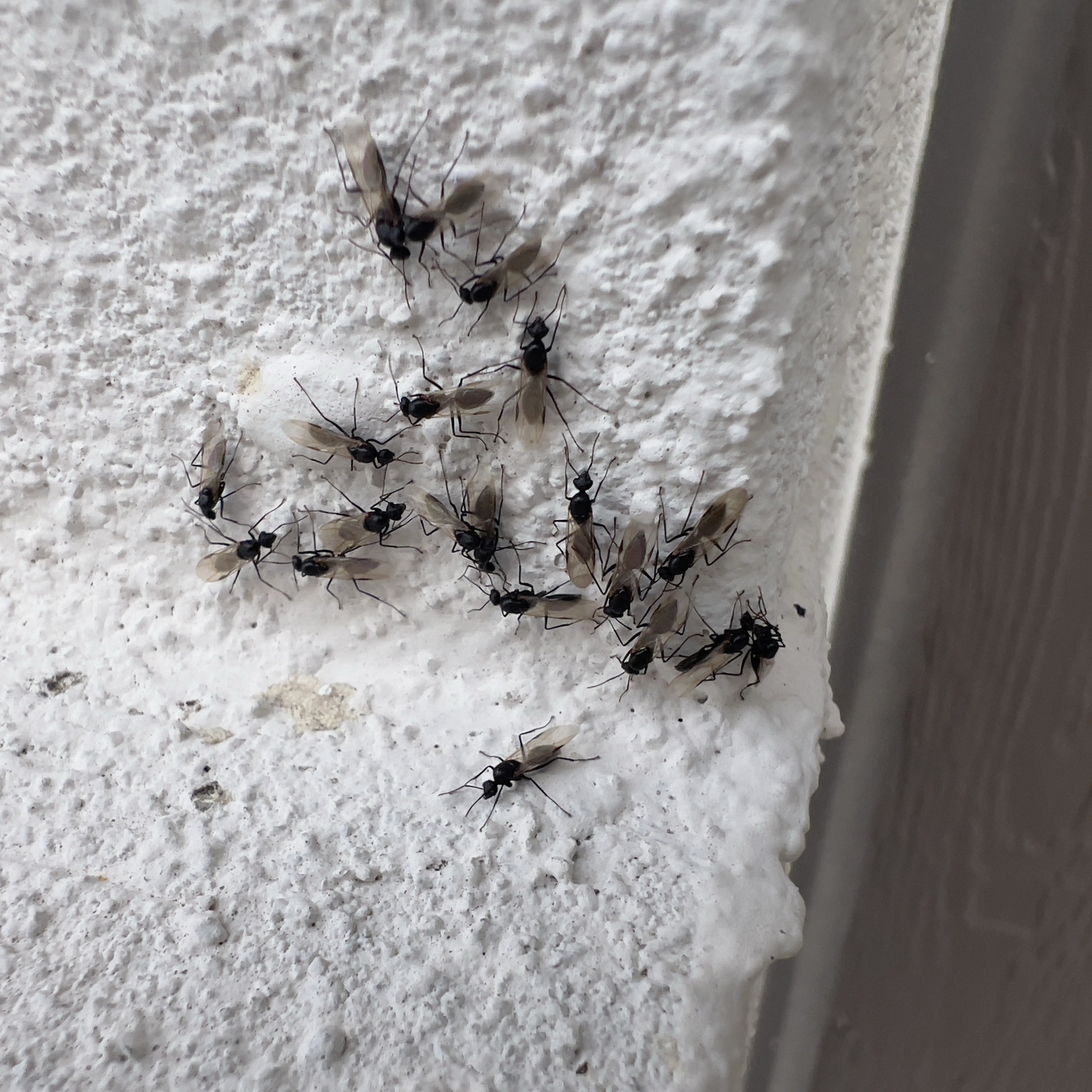
Carpenter Ant (Alates/Flying Ants)
Camponotus species
- Order & Family
- Order: Hymenoptera; Family: Formicidae
- Size
- 6 mm to 12 mm for workers; reproductives (alates) are usually larger, ranging from 12 mm to 18 mm.
Natural Habitat
Typically found in moist or decaying wood, such as tree stumps, logs, or within the structure of homes where wood is damp.
Diet & Feeding
Omnivorous; they consume proteins like other insects and carbohydrates including honeydew, nectar, and sweets inside homes. They do not eat wood.
Behavior Patterns
The winged individuals pictured are 'alates' or swarmers, which are reproductive males and females that emerge to mate and establish new colonies, often after heavy rains. They excavate galleries in wood to build nests but do not consume the wood like termites.
Risks & Benefits
They can cause structural damage to buildings if left untreated as they tunnel through wood. Benefits include their role as decomposers in the forest ecosystem, helping to recycle nutrients from dead trees.