
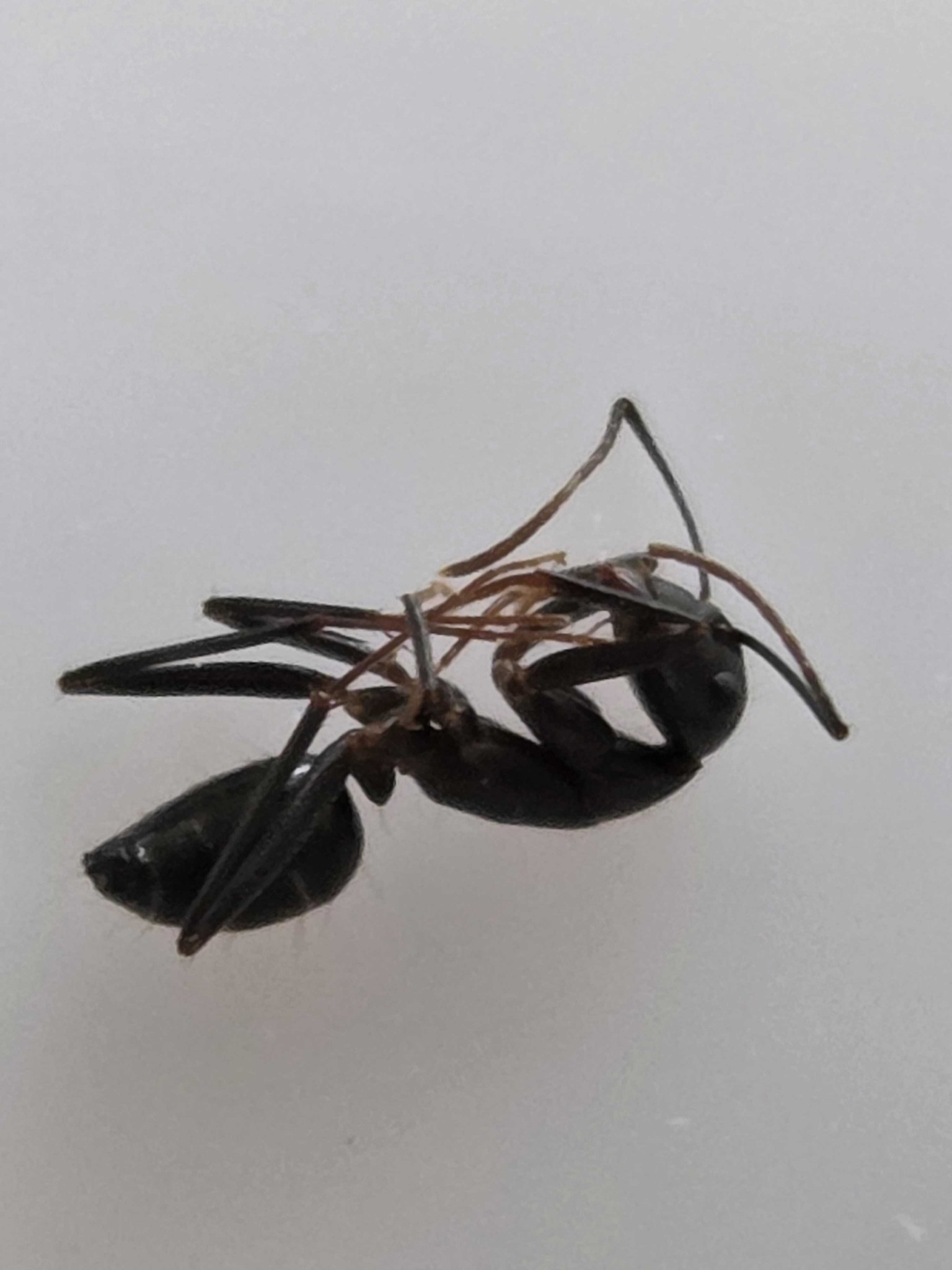
Black Carpenter Ant
Camponotus pennsylvanicus
- Order & Family
- Order Hymenoptera, Family Formicidae
- Size
- Workers vary from 6 mm to 13 mm (1/4 to 1/2 inch); Queens can reach up to 20 mm (3/4 inch).
Natural Habitat
Found in forests, woodlands, and near human structures; they typically nest in moist or decaying wood such as logs, stumps, or hollow trees, but can move into structural timbers.
Diet & Feeding
Omnivorous; they eat plant juices, honeydew from aphids, other insects, and sugary or protein-rich food scraps found in homes. Unlike termites, they do not eat wood, only excavate it.
Behavior Patterns
Polymorphic workers (different sizes). They are primarily nocturnal and form large colonies with a complex social structure. They communicate via pheromones and are known for creating elaborate 'galleries' within wood for nesting.
Risks & Benefits
Benefits: They are major decomposers of forest wood and predators of other insects. Risks: Can cause significant structural damage to homes by tunneling through wood to expand nests. They do not sting but can deliver a painful bite and spray formic acid into the wound.