
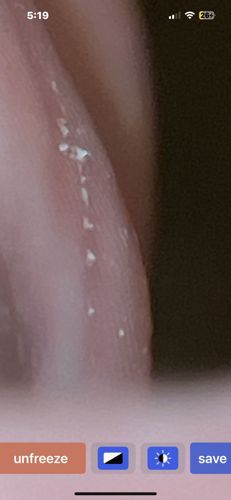
Community identification
Louse egg (Nit)
Pediculus humanus capitis
- Order & Family
- Order: Psocodea, Family: Pediculidae
- Size
- Approximately 0.8 mm in length; roughly the size of a knot in thread.
Natural Habitat
The scalp and hair shafts of human hosts, most commonly found behind the ears and at the nape of the neck.
Diet & Feeding
Head lice at the nymph and adult stages feed exclusively on human blood several times a day.
Behavior Patterns
Nits are laid by female lice and glued firmly to the hair shaft. They take about 6-9 days to hatch. Adult lice cannot fly or jump and are spread primarily through direct head-to-head contact.
Risks & Benefits
Risks include intense itching (pruritus) due to an allergic reaction to louse saliva, and secondary skin infections from scratching. They are not known to transmit bacterial or viral diseases. There are no ecological benefits to humans.