
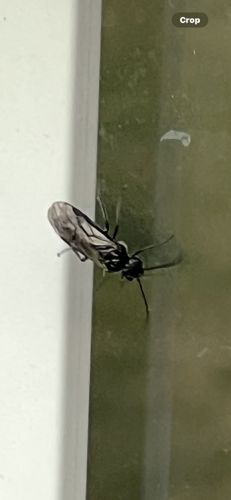
Community identification
Carpenter Ant Alate (Flying Ant)
Camponotus spp.
- Order & Family
- Hymenoptera: Formicidae
- Size
- 6mm to 13mm (0.25 to 0.5 inches)
Natural Habitat
Woodlands, forest edges, and suburban areas; they often nest in damp, decaying wood or structural timbers in homes.
Diet & Feeding
Omnivorous; they eat honeydew produced by aphids, nectar, fruit juices, and other insects. They do not eat the wood they nest in.
Behavior Patterns
Alates are reproductive members of the colony that emerge in 'nuptial flights,' typically in spring or early summer, to mate and start new colonies. They are most active at night.
Risks & Benefits
Benefits include aerating soil and assisting in the decomposition of dead wood. Risks include potential structural damage to homes if they establish a nest in structural wood, though they are not as destructive as termites.