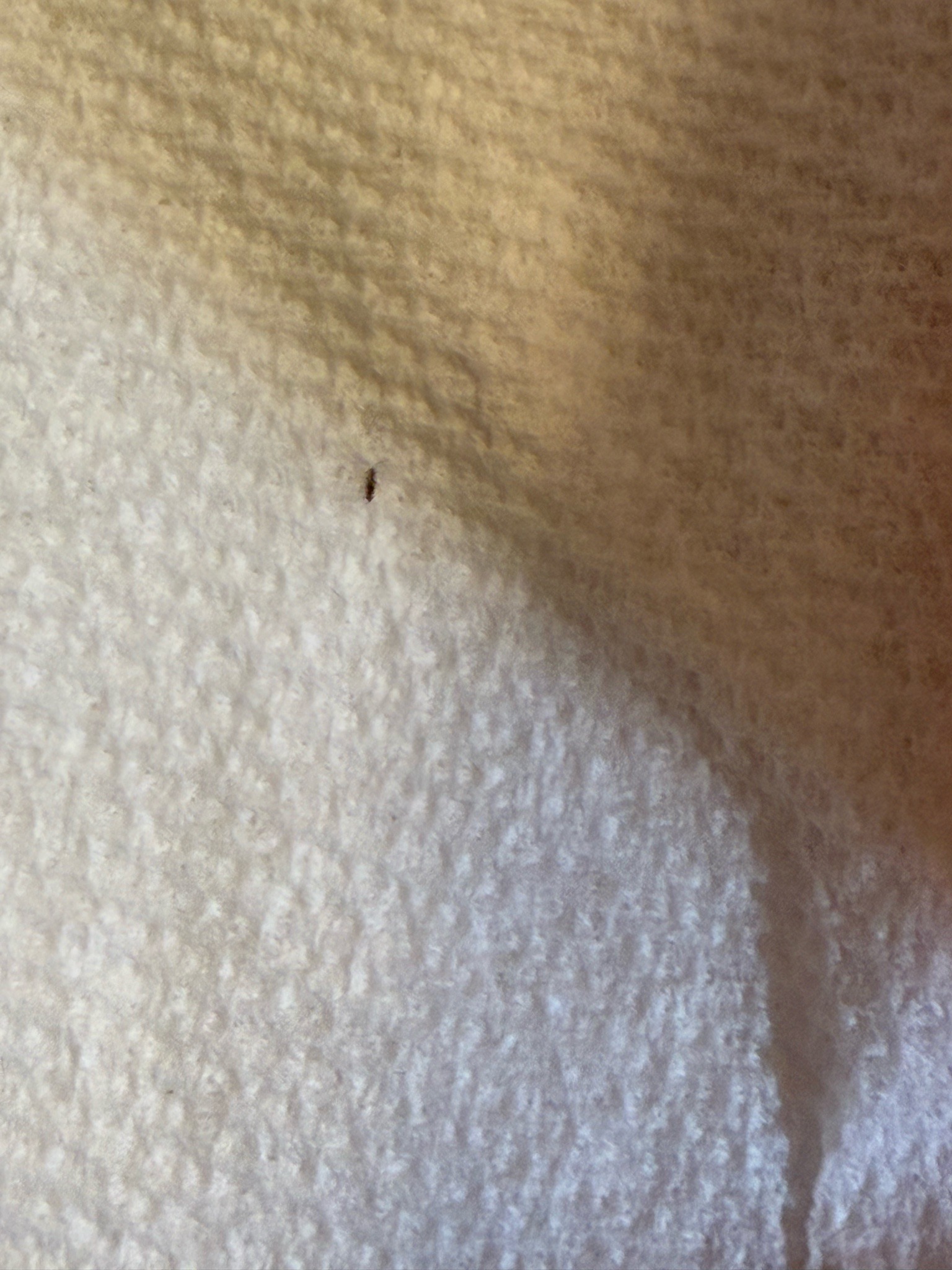
Booklouse (or Psocid)
Scientific Name: Liposcelis spp.
Order & Family: Order: Psocodea, Family: Liposcelididae
Size: 1 - 2 millimeters in length
Natural Habitat
Damp, warm environments with high humidity; often found near books, wallpaper, stored food, and organic debris.
Diet & Feeding
Microscopic fungi, mold, mildew, starch-based glues, and organic grains.
Behavior Patterns
They are primarily nocturnal and light-avoiding, moving in jerky, rapid bursts. They thrive in humidity above 60% and do not undergo a larval stage, instead hatching as nymphs.
Risks & Benefits
Harmless to humans as they do not bite or transmit disease; however, they can be minor pests of stored pantry goods and can damage old books or documents by eating the glue.
Identified on: 6/6/2026