
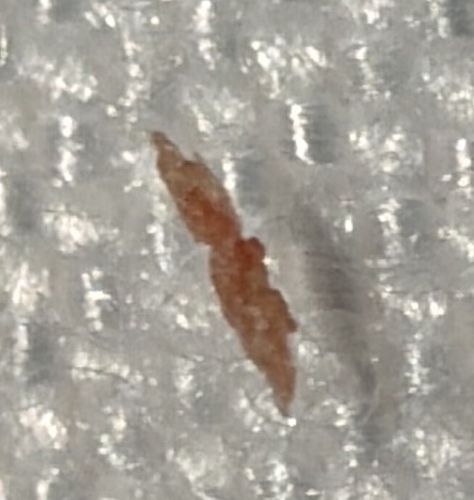
Community identification
Indian meal moth (larva/cocoon)
Plodia interpunctella
- Order & Family
- Lepidoptera: Pyralidae
- Size
- Larvae are approximately 10 to 12 mm (0.4 to 0.5 inches) long when mature.
Natural Habitat
Pantry areas, kitchens, warehouses, and locations where dry food items like grains, flour, and nuts are stored.
Diet & Feeding
Dry stored food products including flour, cereal, cornmeal, crackers, chocolate, nuts, seeds, and dried pet food.
Behavior Patterns
Larvae spin silken webs throughout infested food; they often crawl away from food sources to find cracks or crevices to pupate. The cocoon/pupa shown is the final stage before emerging as an adult moth.
Risks & Benefits
A major pantry pest that causes significant economic loss and food waste through contamination by silk webbing and frass. They are not harmful to humans directly, but infested food should be discarded.