
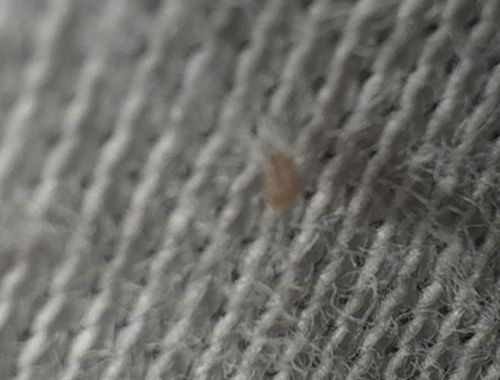
Booklouse (or Psocid)
Liposcelis spp. (Common genus in homes)
- Order & Family
- Order: Psocodea (formerly Psocoptera); Family: Liposcelididae
- Size
- Very small, typically 1mm to 2mm in length.
Natural Habitat
They thrive in humid, damp environments indoors, such as bathrooms, kitchens, basements, or areas with water leaks. They are often found on moldy paper, books, wallpaper, stored grains, and sometimes mattresses or fabric if humidity is high.
Diet & Feeding
They feed on microscopic mold, fungi, starches, and organic debris found in glues (book bindings), wallpaper paste, grains, and damp cardboard.
Behavior Patterns
Booklice do not bite. They are scavengers that prefer darkness. They move in short, jerky bursts rather than flying (many indoor species are wingless). They reproduce rapidly in high-humidity conditions.
Risks & Benefits
Risks: They are a nuisance pest that can contaminate stored food products and may trigger asthma in sensitive individuals due to their body fragments. They are often an indicator of high humidity and potential mold growth. Benefits: They play a minor role in recycling organic matter but are generally considered pests in domestic settings.