
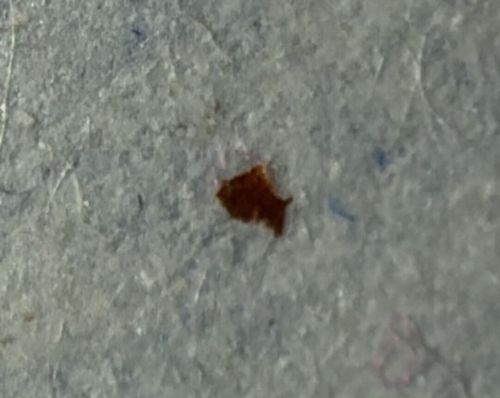
Bed Bug (Fecal Spotting / Cast Skin)
Cimex lectularius
- Order & Family
- Order: Hemiptera, Family: Cimicidae
- Size
- This specific image appears to show a fecal spot or a fragment of a cast skin rather than a live adult. Adult bed bugs are typically 4-5 mm long, while eggs and nymphs are much smaller (1-4 mm).
Natural Habitat
Typically found in human dwellings, particularly in cracks and crevices around beds, mattress seams, box springs, headboards, and upholstered furniture.
Diet & Feeding
Hematophagous, meaning they feed exclusively on blood, primarily from humans, though they can feed on other warm-blooded animals.
Behavior Patterns
Nocturnal and elusive, hiding during the day in tight spaces. They leave behind tell-tale signs like the rust-colored spotting seen here (digested blood), shed skins (exuviae), and tiny white eggs.
Risks & Benefits
Risks: Bites can caused itchy red welts, allergic reactions, anxiety, and sleeplessness. They are notoriously difficult and expensive to eradicate. While not proven to transmit disease directly, secondary infections from scratching bites can occur. Benefits: None known to humans or domestic ecosystems.