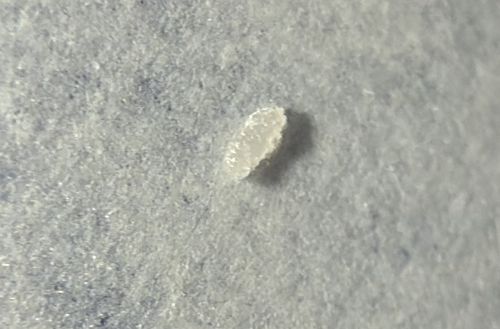
Tapeworm Segment (Proglottid)
Scientific Name: Dipylidium caninum (most common species found indoors via pets)
Order & Family: Order: Cyclophyllidea / Family: Dipylidiidae
Size: Segments are typically 3 mm to 12 mm long (resembling a grain of rice or a cucumber seed).
Natural Habitat
Intestinal tract of hosts (dogs, cats, humans). Proglottids are often found in pet bedding, on carpet, or around the anal area of an infected animal.
Diet & Feeding
The adult tapeworm absorbs nutrients mainly from the host's digested food within the intestine.
Behavior Patterns
These segments detach from the main body of the worm and exit the host via feces or by crawling out of the anus. While mobile, they can expand and contract. Eventually, they dry out, resembling sesame seeds, and release eggs.
Risks & Benefits
Risks: Indicates a parasitic infection in a household pet (and rarely humans). They are an intermediate host for fleas; pets ingest fleas containing larvae to become infected. Benefits: None, medically considered a parasite.
Identified on: 2/23/2026