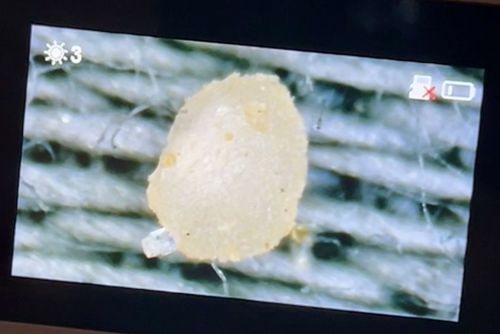
Bird Lice (Louse) / Chewing Louse
Scientific Name: Menopon gallinae (example species)
Order & Family: Order: Psocodea (formerly Phthiraptera), Family: Menoponidae
Size: 1.0 mm to 2.5 mm in length
Natural Habitat
Typically found on domestic poultry, wild birds, and sometimes in bird nesting materials brought into or near human dwellings.
Diet & Feeding
They feed on feathers, skin debris, blood, and oily secretions from the host bird.
Behavior Patterns
They are permanent ectoparasites, meaning they spend their entire life cycle on the host. They are fast-moving and agile, often hiding at the base of feathers or in downy areas.
Risks & Benefits
Risks: Can cause severe irritation, feather loss, and decreased egg production in poultry. While they may crawl onto humans if handled, they cannot survive or reproduce on human blood. Benefit: None to humans; they are strictly parasitic pests.
Identified on: 3/24/2026