
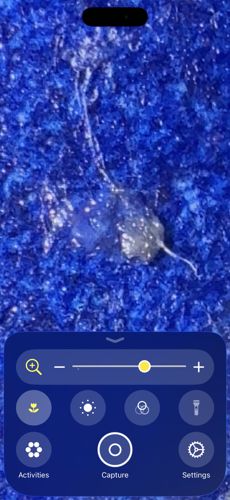
Community identification
Drain Fly Larva
Psychodidae family
- Order & Family
- Order: Diptera; Family: Psychodidae
- Size
- 3 to 10 mm in length
Natural Habitat
Moist environments rich in organic matter, such as drains, sewage pipes, septic tanks, and wet compost.
Diet & Feeding
Microscopic plants and animals, algae, fungi, and decaying organic matter found in the slime layer of drains.
Behavior Patterns
The larvae live within the gelatinous film of drains; they are able to survive in low-oxygen environments and eventually pupate before emerging as fuzzy, moth-like adult flies.
Risks & Benefits
Generally harmless to humans and do not bite; they can be a nuisance in large numbers and may mechanicaly transfer bacteria from drains to surfaces, but they also help break down organic clogs.